Singing to a room, not a microphone
Early music was written for stone chapels and modest halls, and it comes alive in exactly those spaces.
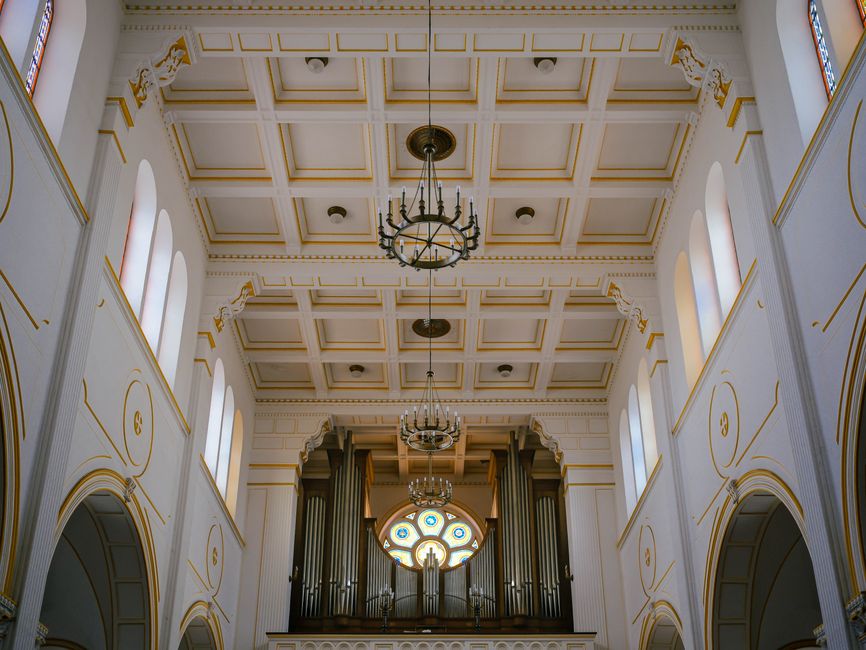
Choosing where to sing is a musical decision, not a logistical one. The same programme in a dry modern hall and in a stone chapel is effectively two different pieces — the tempo we can take, the way we release consonants, even how far apart we stand all change with the room.
The room is an instrument
A resonant chapel adds a bloom to each chord that no speaker reproduces. We choose venues for their acoustics before their size, and we would rather sing to forty people in a good room than to three hundred in a bad one. A long reverberation also forces a slower tempo: push a fast piece in a resonant space and the counterpoint turns to mud.
No conductor, mostly
In a small ensemble the singers lead one another by breath and glance. Ensemble is a conversation, not a command. It takes longer to prepare than conducted singing, and it produces a flexibility that a beat pattern cannot: phrases can stretch and settle because everyone is listening rather than watching.
Why no amplification
A microphone fixes the balance in one place; unamplified voices let the room do the blending, differently for every listener. It also changes how we sing — amplified, the temptation is to give less and let the system do the work, and the music loses the physical effort that is part of its character.
The singers describe it in voices.